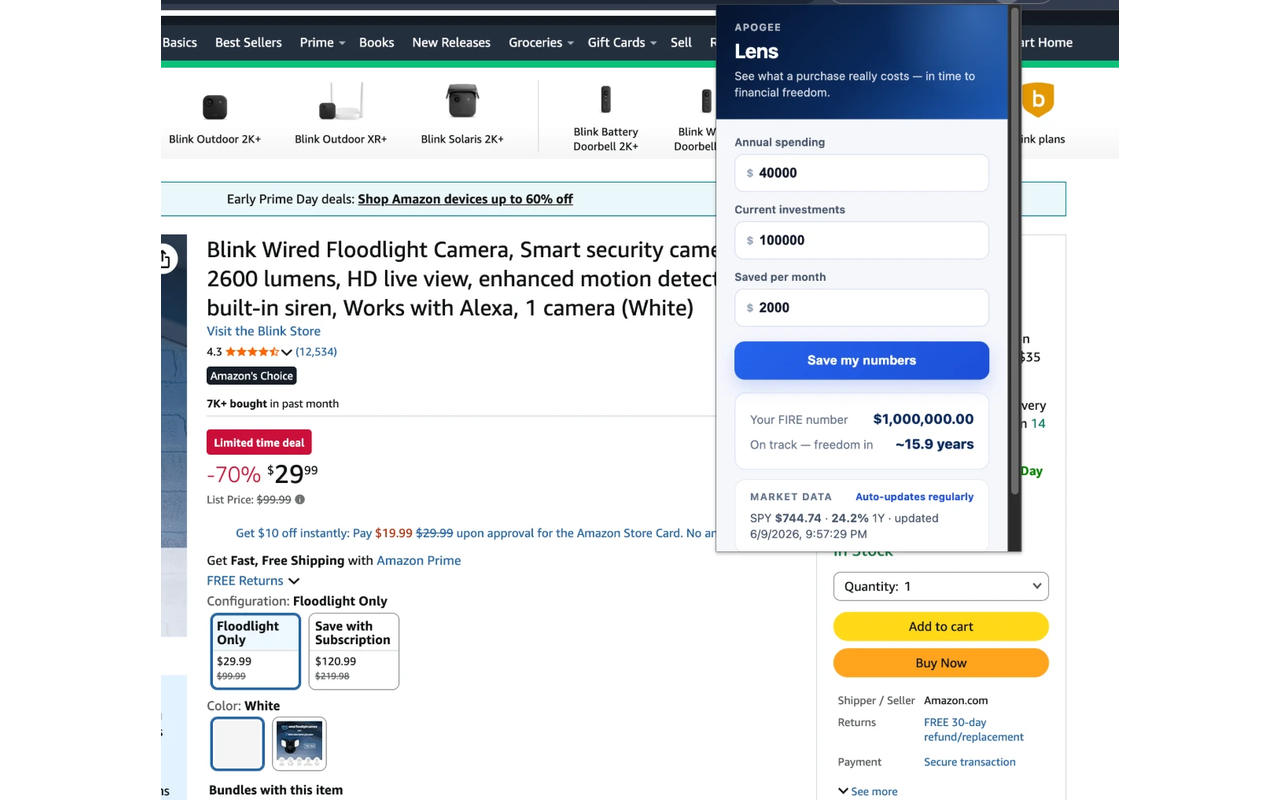
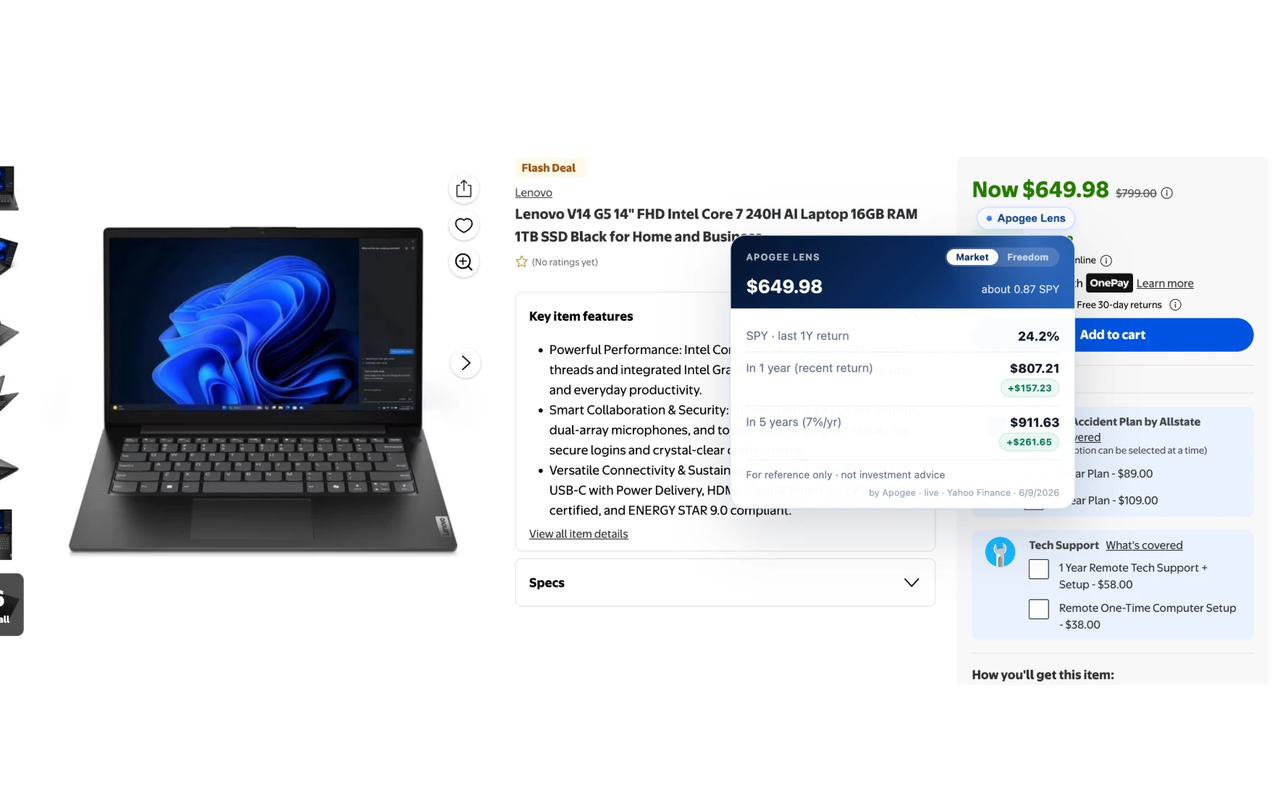
How does this retirement calculator work?
It turns your inputs into an age. The FIRE number is annual retirement spending divided by the withdrawal rate. Each month, take-home pay minus spending is invested and compounded at the expected return. If inflation is above zero, that return becomes a real rate first. The age is when the projected balance reaches the number.
-
1
Inputs
Age, take-home pay, spending, and what is already invested.
-
2
FIRE number
Annual retirement spending divided by the withdrawal rate.
-
3
Age
Monthly investing, compounded, until the balance meets the number.
The sliders open on these defaults:
- Current age: 30
- Monthly take-home pay: $6,000
- Monthly expenses: $3,800
- Current investments: $50,000
- Expected annual return: 6%
- Withdrawal rate: 4%, and inflation: 0%, both under More assumptions
- Retirement monthly spend: matches monthly expenses until you change it
- Coast FIRE target age: 65, also under More assumptions
At those defaults, retirement spending is $3,800 × 12 = $45,600 a year. At 4%, the FIRE number is $45,600 ÷ 0.04 = $1,140,000. Monthly investing is $6,000 − $3,800 = $2,200. Inflation at 0% means the 6% return is used as entered. Above zero, the real return is (1 + return) ÷ (1 + inflation) − 1.
What withdrawal rate should I use?
Use 4% as the classic model: annual spending × 25. Morningstar’s 2026 base case is a 3.9% starting withdrawal for 30 years, with a 90% probability of funds remaining. That 90% is their published figure, not a result from this calculator. A lower rate raises the number. Both rows are models.
| Planning rate | How it is computed | FIRE number |
|---|---|---|
| 4% (default here) | $40,000 ÷ 0.04, or ×25 | $1.0 million |
| 3.9% (Morningstar 2026 base case) | $40,000 ÷ 0.039 | about $1.03 million ($1,025,641) |
Accessed October 5, 2026, that write-up also puts the prior-year base case at 3.7%, and flexible strategies as high as 5.7%. A horizon longer than 30 years is a reason to test a rate under 4%. See what a FIRE number is, then move the withdrawal-rate slider under More assumptions.
Why does savings rate matter so much?
On the same take-home pay, a higher savings rate does two things at once. You invest more each month, and you spend less, so the FIRE number gets smaller while the contribution gets larger. The percentage above this explanation follows your sliders. The table below does not.
Mr. Money Mustache (January 13, 2012) printed a savings-rate table that starts from a net worth of zero, assumes a 5% return after inflation, and uses a 4% withdrawal rate. It is an illustrative model. It will not match the chart on this page, which starts from the investments and return you enter.
| Savings rate | Working years until FI |
|---|---|
| 10% | 51 |
| 15% | 43 |
| 25% | 32 |
| 50% | 17 |
| 65% | 10.5 |
| 75% | 7 |
In the article’s own words, saving 10% means about 51 working years, and moving to 15% is about eight years earlier. There is no Apogee savings-rate guide to link yet.
How does early retirement differ from Social Security age?
The age above is a FIRE age: when invested savings could cover spending at the withdrawal rate you set. It is not a Social Security age. For anyone born in 1960 or later, full retirement age is 67. The earliest retirement claim is 62, and claiming then reduces the monthly benefit.
This calculator ignores Social Security unless you lower retirement spending to stand in for a benefit you expect. Pensions and part-time pay are ignored the same way, unless that money is already inside the investment balance. Source: U.S. Social Security Administration, Retirement Age, accessed October 5, 2026.
Frequently asked questions
Is this accurate?
It is exact math for the inputs you set, not a forecast of markets, taxes, or future spending. Change return, withdrawal rate, or inflation under More assumptions and the age moves. Use it as a planning model.
Does it include Social Security or taxes?
No. It uses age, take-home pay, spending, current investments, expected return, withdrawal rate, and optional inflation. It does not add Social Security, pensions, or taxes. To approximate a benefit, lower retirement spending yourself. That is still a model, not a tax plan.
What return should I assume?
The default is 6% a year, and that rate compounds while inflation is 0%. Above zero, the calculator uses a real return: (1 + return) ÷ (1 + inflation) − 1. A higher assumption shortens the timeline. It does not make that return more likely.
Is this financial advice?
No. For educational purposes only. This estimate is not financial, tax, or investment advice. Meridian Studio LLC / Apogee publishes this page and does not recommend a portfolio, a withdrawal rate, or a date.
Sources
- Morningstar, “What’s a Safe Retirement Withdrawal Rate for 2026?” Accessed October 5, 2026.
- U.S. Social Security Administration, “Retirement Age.” Accessed October 5, 2026.
- Mr. Money Mustache, “The Shockingly Simple Math Behind Early Retirement,” January 13, 2012.
For educational purposes only. This estimate is not financial advice. Not financial, tax, or investment advice. Historical studies and planning research are not forecasts. Meridian Studio LLC / Apogee.